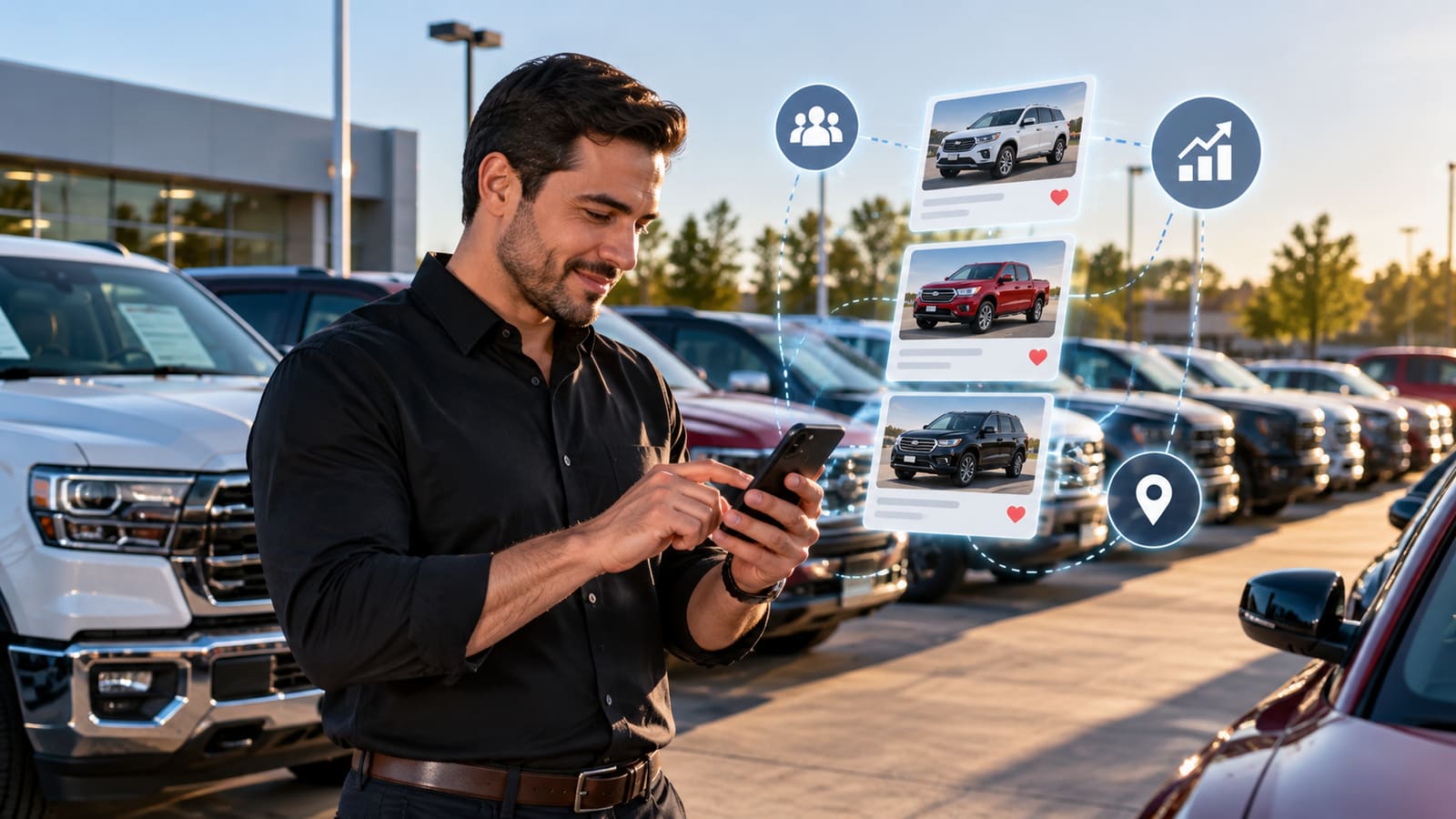
Getting customers for a car dealership today depends on more than walk-in traffic. Most buyers browse vehicles on their phones before they ever call, message, or visit your lot.
To bring in buyers consistently, you need to combine a dedicated website with your live inventory catalog, promotion across the channels your customers already use, and real campaign tracking. Here is a clear, step-by-step guide.
1. Digital Presence: Create a Catalog Website for Your Car Lot
The first step to attracting more buyers is giving them one professional place where they can browse every vehicle in your inventory at any time, 24/7.
When shoppers only see scattered social media posts, they rarely know what else you have in stock, what the current price is, or whether a car is still available. With your own catalog website:
- Buyers review photos, pricing, financing estimates, and branch locations before reaching out.
- They already know which vehicles interest them when they contact you.
- They can message you on WhatsApp, call, or email right from the listing to ask questions or schedule a visit.
- Your dealership builds immediate trust and looks organized next to competitors.
If you do not have a website yet, you can launch one in minutes with AutoLotUp, a platform built specifically for car lots where you manage inventory, switch vehicle status (Available, Reserved, Sold, or Draft), and publish a branded catalog without paying for hosting or custom web development.
👉 Create your AutoLotUp account and publish your dealership catalog today.
2. Share Your Catalog Across All Your Platforms
Once your website is live, place your catalog link everywhere customers interact with your business:
- In your Facebook and Instagram bio and posts.
- In your TikTok profile link (where available).
- In WhatsApp quick replies, statuses, and conversations.
- On business cards, yard banners, or windshield sheets using a QR code.
When promoting a single vehicle, share the direct link to that vehicle’s listing. When someone asks “what cars do you have available?”, send the main catalog link.
3. Leverage Google Maps to Reach Local Buyers
If your lot has a physical location, keep your Google Business Profile complete and accurate:
- Exact address and business hours.
- Phone and WhatsApp contact numbers.
- Clear, recent photos of your lot and vehicles.
- The direct website link to your vehicle catalog.
When local shoppers search for a car lot on Google Maps, they can browse your available vehicles right away before deciding to visit. Asking satisfied buyers for reviews also strengthens local trust.
4. Use Facebook and Instagram Ads and Connect Your Meta Pixel
Paid ads on Facebook and Instagram are one of the fastest ways to put your inventory in front of buyers in your area.
Two simple campaign formats work well for car lots:
- Single-vehicle ads: clear photos or a short walkaround video linking straight to that vehicle’s listing.
- Full-catalog or WhatsApp ads: ideal for showcasing variety and starting conversations with buyers looking to purchase or finance.
Why Connecting Your Meta Pixel Matters
If you run ads on Facebook or Instagram, connecting your Meta Pixel to your catalog website is essential. The Meta Pixel tracks what happens after someone clicks your ad—which vehicles they view and when they click your WhatsApp or contact buttons.
In plain terms, connecting Meta Pixel helps you:
- See which campaigns actually perform instead of guessing where your budget goes.
- Identify which vehicles attract the most interest so you can invest in what brings real leads.
- Help Meta’s algorithm optimize delivery toward people more likely to contact your dealership.
With AutoLotUp, you simply paste your Meta Pixel ID in your dashboard—no coding needed—and pair it with campaign links to track views, clicks, and top-performing vehicles.
5. Consider Google Ads for High-Intent Searches
Google Ads works well when you want to reach buyers actively searching for specific vehicles in your city, such as “used cars in [city]” or “used pickup trucks in [city].”
Match keywords to inventory you actually have on the lot, send each ad to the most relevant listing or filtered page, and start with a controlled budget while you measure real inquiries.
6. Post Short Vehicle Videos on TikTok and Instagram Reels
Short videos show details photos cannot capture—interior space, features, condition, and walkaround views.
Keep videos brief (20–45 seconds) with good lighting, share key details like year, trim, and price or down payment, and end with a simple call to check the full catalog via your profile link.
7. Make It Easy for Customers to Share Your Vehicles
Most car buyers ask a partner, family member, or friend for a second opinion. Clean individual listing links let shoppers forward a vehicle on WhatsApp in seconds.
Adding a QR code on window sheets or signage also lets after-hours visitors view photos, pricing, and message you immediately.
8. Measure Which Channels Generate Real Opportunities
Do not judge marketing by views or likes alone. Track the metrics tied to actual sales:
- Catalog and individual vehicle page views.
- Most viewed vehicles each week or month.
- Clicks on WhatsApp, call, and email buttons.
- Conversations started and lot appointments scheduled.
- Closed sales and ad spend per inquiry.
Tracking with Meta Pixel and campaign links keeps your budget focused on channels that deliver real buyers.
9. Combine Paid Promotion With Organic Visibility
Paid ads bring fast traffic; social media, Google Maps, and an organized catalog website build steady organic inquiries over time without paying for every click. Combining both keeps your pipeline consistent.
Get Started With AutoLotUp
With AutoLotUp, you launch your dealership website and inventory catalog, connect your Meta Pixel to track Facebook and Instagram ads, and make it easy for buyers to reach you on WhatsApp.
Ready to attract more customers to your car lot?
Create your AutoLotUp account, organize your inventory, and publish your catalog today.
Frequently Asked Questions
Why do I need a website if I already post on Facebook?
Social posts get buried quickly and make it hard to see everything you have in stock. A catalog website keeps all available vehicles organized in one link with filters, current prices, and a direct WhatsApp button.
Do I need to pay for ads to get customers?
Not to get started. Sharing your catalog on social media, WhatsApp, and Google Maps can bring initial leads. Paid ads on Facebook, Instagram, or Google help you scale faster in your local area.
Why should I connect Meta Pixel when running Facebook ads?
Meta Pixel measures what visitors do after clicking your ad—which cars they view and whether they click to contact you—so you know which campaigns bring real leads and can optimize your budget.
Should I advertise my full catalog or a single vehicle?
Both work well for different goals. Single-vehicle ads drive focused inquiries on a specific unit, while catalog ads showcase your full selection to broader buyers.
How much should I spend on advertising?
Start with a comfortable test budget across a few vehicles and audiences, then increase spend only on the campaigns that generate qualified inquiries and visits.